
The City and Unreached Peoples
by Harvie M. Conn
The following was a presentation by the late Harvie Conn at Urbana missions conference in 1987:
What is a city? For a North American white, a city is a melting pot. For a suburbanite it's a ghetto. For my next-door neighbor in inner-city Philadelphia, a city is "One large collection of nothings."
Now all these definitions are wrong, and they're all wrong for the same reason. Yuppie, suburbanite or black, most people can't see anything in the city except mathematical urban units of one. They're like the pastor I met once in our ministry in Korea. At a moment of truth he confided in me, "I have a very hard time telling all Americans apart. You look so alike." I think that's how we all see cities.
More of the article HERE
It is a two part article>>>
The City and Unreached Peoples Part 1: Here
The City and Unreached Peoples Part 2: Here
Saturday, November 25, 2006


Wednesday, November 22, 2006
New Issue of thechurchplanter online!
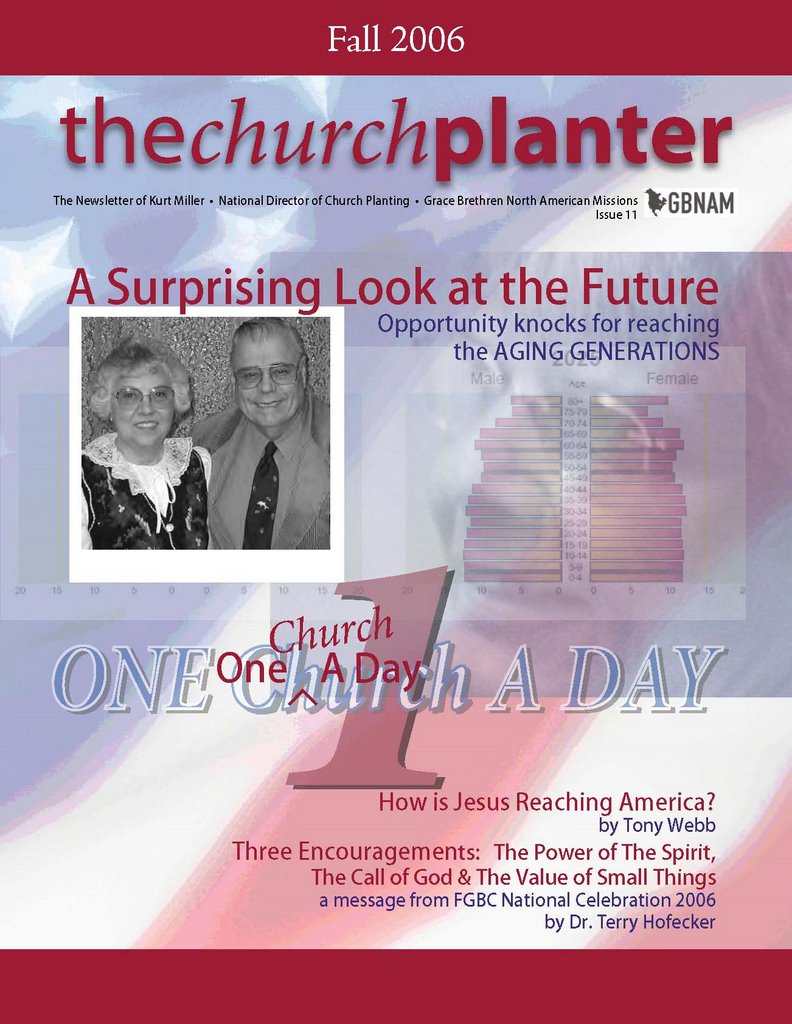 Our 11th issue of "thechurchplanter" is posted online for all to read. Click HERE to check it out.
If you would like to receive a hard copy or multiple copies please contact Mike and we'll get them out to you.
Recent Back Issues of "thechurchplanter":
Women & Church Planting
Essential Evangelists
Churches Planting Churches
Poverty
Thursday, November 09, 2006
Who Can Plant a Church?
In order to engage in church planting effectively, it is important to consider who can plant a church. Do only churches plant churches? What about denominations? What about an individual? For that matter, must an individual be ordained, formally trained, and sent out by an agency of the denomination? In both the New Testament and today, we see several patterns regarding the who of church planting. Check out the rest of the article HERE
Thanks to www.churchplants.com for this helpful article.
Thanks to www.churchplants.com for this helpful article.
Saturday, October 21, 2006
Multi-Cultural Church Planting Guide
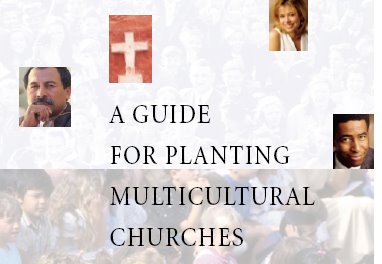
The multicultural church matches a need in our society. In the “Foreword” to Manuel Ortiz’ book One New People: Models for Developing a Multiethnic Church,Harvie M. Conn crystallizes this point: In a day of fear and mistrust the multiethnic (or multicultural) church is a sample of recomposition in Christ. E pluribus unum (“One out of many”) is a visionary slogan in politics; in the multiethnic church it is a response of the Holy Spirit to culture wars. It is well worth more than a quick glance by a fractured society seeking unity in too many superficial solutions, and by a church that often doesn’t realize the treasure it has been given.
The multicultural church prepares us for a picture of eternity. “And they sang a new song: You are worthy to take the scroll and to open its seals, because you were slain, and with your blood you purchased men for God from every tribe and language and people and nation” (Rev. 5:9).In his book Experiencing God, Henry Blackaby counsels, “Find out where the Master is—then that is where you need to be. Find out what the Master is doing—then that is what you need to be doing.” God is already drawing people of every tribe and language and people and nation together to worship Him for all eternity. The multicultural church becomes an example of what can be done on earth and a foretaste of what will be in heaven. Is God calling you as a prayer supporter, a multicultural church planter, a church planting team member, a church planter’s mentor, or a helper from a partnering church? If “yes” or “maybe” is your answer to one of these, God may use this resource in and through your life.
The whole guide is available HERE
Friday, October 20, 2006
Great Bibliography and more in Church Planting Class Syllabus
I found this syllabus online for the following class:
CHURCH PLANTING SEMINAR
by Steve Childers, Steve Ogne, Ed Stetzer & Others
Doctor Of Ministry Elective Course 2DME 853
ORLANDO, FL (HOTEL) WWW.GCA.CC
JANUARY 30 - FEBRUARY 3, 2006
This class was part of Reformed Theological Seminary (www.rts.edu) coursework. As you can see from the Teacher List, this is a good crew. The bibliography in this syllabus is excellent. I thought it was at least worth posting for that reason.
Check it out HERE
CHURCH PLANTING SEMINAR
by Steve Childers, Steve Ogne, Ed Stetzer & Others
Doctor Of Ministry Elective Course 2DME 853
ORLANDO, FL (HOTEL) WWW.GCA.CC
JANUARY 30 - FEBRUARY 3, 2006
This class was part of Reformed Theological Seminary (www.rts.edu) coursework. As you can see from the Teacher List, this is a good crew. The bibliography in this syllabus is excellent. I thought it was at least worth posting for that reason.
Check it out HERE
Wednesday, October 18, 2006
Reconciling Community

When sociologists want to provide evidence that there is still a racial divide in our country, many times they look to the Church for the compelling facts. Maybe you've heard the saying before, "Eleven o'clock on Sunday morning is the most segregated hour in America." Though the Bible is the most multicultural piece of literature you'll ever put your hands on, the bride of Christ struggles to look like the first Christian Church in the book of Acts or the future kingdom of heaven where believers will live eternally.
I have the awesome privilege of serving as the senior pastor of The Sanctuary Covenant Church in Minneapolis, Minn. In just over three short years, this ministry has grown to become an intergenerational, hip-hop, multiethnic, reconciling and urban community of close to 800. Our congregation at the time of this writing is about 60 percent European-American, 35 percent African-American, and the rest a mix of Latino, Asian and others.
As an African-American male in my mid-30s, I often wonder not only how I came to pastor this amazing church, but also how I live in what I consider the spiritual warfare of the racialized matrix in American society. Let me briefly guide you through an experience of corporate worship at The Sanctuary:
On this particular Sunday morning, an experience of corporate worship is about to begin that has been focused on racial reconciliation for the last seven weeks. The service begins with our worship leader giving an opening prayer and then leading a time of praise and worship, which includes hip-hop, soul, rock licks and urban gospel. It's interesting to me that our church is 60 percent European-Americans, yet most Sundays our praise and worship style is so diverse.
Before the sermon, our Reconciliation Design Team presents a dramatic, spoken word piece titled "Where I'm From." The piece is presented by a multiethnic group of women and men who tell their unique ethnic stories of their upbringing, faith and take on the world around them. They end the piece by asking in unison, "Where are you from?" After that, I preach a sermon titled "Reconciliation and Worship," which ends with an altar call of people from different backgrounds committing to and praying through being ambassadors of reconciliation in the world.
I realize in that moment that this is something special and out of the ordinary for a church in America. The Sanctuary is what I would call a post-black, post-white church. I think about this, and I grieve because I want so badly for the norm of the Church in America to be an ancient-future Church that lives in the tension and victory of the first Church in the book of Acts and the picture of heaven that we see in Revelation 7.
One might ask why it would be so important for the Church today to be a Christ-centered, multiethnic and reconciling community. Well, there is the sociological reason that we live in an ever-increasing multiethnic and multicultural society, and if the Church is going to be a relevant force of evangelism and mission in this reality, we must strive internally for the multiethnic faith community. This is not the most important reason though. The Church ought to be multiethnic because it's biblical. We see this through the Great Commission, as well as the early Church and future Church; we also must wrestle with the multiethnic Christ, who is the Bridegroom to the Church we are called to develop through the empowerment of the Holy Spirit.
The black church and the white church are the most visible pictures of our need to become one so that the world might know that the Father sent the Son (John 17:21).
The black church historically is a community refuge, an institution of African-American empowerment and a place of escape from the remnants of racism and prejudice that have yet to be dismantled in our society. I believe that because of the history that the black church has in our country in terms of being prophetic, addressing social injustice and being bold and charismatic, it ought be one of the leading champions of the Christ-centered, multiethnic and reconciling church. This is truly what I mean by becoming a post-black church. Through taking a post-black church approach, the black church can also point other ethnic-specific churches to the biblical call to oneness and reconciliation.
Though not typically referred to as the white church, it remains the majority church in this country for the time being. Through the ever-increasing multiethnic and multiracial reality within our nation, however, the future of the white, dominant church is threatened.
By the black and white church embracing the mission and theology of reconciliation, we not only produce a church that is relevant to an ever-increasingly multiethnic and multicultural world, but we also become the beloved Church portrayed in Scripture. My prayer is that the multiethnic and Christ-centered Church would become the norm in America.
Efrem Smith is the pastor of The Sanctuary Covenant Church and is profiled in The RELEVANT Nation (RELEVANT Books).
From the 850 WORDS OF RELEVANT :: 10.16.06
Thursday, September 28, 2006
Cross-Cultural Church Planting Models
If you are thinking about how your church could cross-cultures and start an ethnic church, this article can help give you some ideas of different ways it could work.
Read on for more...
Urban Cross-Cultural Church Planting Models by Jerry L. Appleby (1986) Reprinted with permission from Association of Nazarenes in Social Research
No two situations are the same. Each neighborhood, language, and church needs its own action plan. Each plan becomes its own model.
Several churches have followed somewhat similar patterns. The following criteria have been used to select and describe models that can be used as examples.
There are actual churches that have examined by the author.
They are successful in that growth and evangelism have taken place. It might be said that the model "worked."
These models do not seem to have geographic sectional overtones or to have successful because of their geographic location.
Certain adaptations can be made to these models without loss of workability. All the characteristics may not fit a given situation, but the models can still be a usable plan.
These examples are not meant to be exhaustive, but illustrative. Other examples no doubt do exist. God given ingenuity will probably create more in the future.
Read the article here
Read on for more...
Urban Cross-Cultural Church Planting Models by Jerry L. Appleby (1986) Reprinted with permission from Association of Nazarenes in Social Research
No two situations are the same. Each neighborhood, language, and church needs its own action plan. Each plan becomes its own model.
Several churches have followed somewhat similar patterns. The following criteria have been used to select and describe models that can be used as examples.
There are actual churches that have examined by the author.
They are successful in that growth and evangelism have taken place. It might be said that the model "worked."
These models do not seem to have geographic sectional overtones or to have successful because of their geographic location.
Certain adaptations can be made to these models without loss of workability. All the characteristics may not fit a given situation, but the models can still be a usable plan.
These examples are not meant to be exhaustive, but illustrative. Other examples no doubt do exist. God given ingenuity will probably create more in the future.
Read the article here
Sunday, September 17, 2006
Kurt in Mexico to encourage church planting at Equipo Internationale family conference.
Kurt is on a ministry trip to Mexico for the next week with Martin Guerena, Phil Guerena, John Baker and Tony Webb to encourage pastors and their wives in their church planting goals and work. He will speaking each night and at the annual Equipo Internationale family conference.
Friday night the group attended the Mexican Independence Day fesitivites in Tacate where nearly 100,000 people gathered to celebrate. The evening ended with a magnificant fireworks display. To see pictures and more info of the trip throughout the trip, click on the following link: http://nwcmexicoeitrip2006.blogspot.com
Your prayer support this week is greatly appreciated.
Friday night the group attended the Mexican Independence Day fesitivites in Tacate where nearly 100,000 people gathered to celebrate. The evening ended with a magnificant fireworks display. To see pictures and more info of the trip throughout the trip, click on the following link: http://nwcmexicoeitrip2006.blogspot.com
Your prayer support this week is greatly appreciated.
Saturday, September 09, 2006
Women & Church Planting Issue of Posted Online
 Our 10th issue of "thechurchplanter" on Women & Church Planting is posted online for all to read. Click HERE to check it out.
If you would like to receive a hard copy or multiple copies please contact Mike and we'll get them out to you.
Recent Back Issues of "thechurchplanter":
Essential Evangelists
Churches Planting Churches
Poverty
Living Stuff Before Organizational Stuff
Powerpoint Of My Baby Boomer Church Workshop

I've had several people inquire about the powerpoint that I used for my Baby Boomer Church Workshop at our National FGBC Celebration. Well, it's posted now so you can glean the information you want. Click here (it's a 3MB show...so give it a minute or so to load. The back and forward buttons are at the bottom of the window along with a slide-show button to the bottom right so you can navigate through the presentation)
If you would like to purchase the audio of this presentation, click here for the website to order.
Thursday, August 31, 2006
Up-coming Northeast Assessment Center- January 18-20, 2007
GBNAM Northeast will host its sixth church Planter Candidate Assessment Center in PA on January 18-20, 2007.
The Center is a tremendous resource tool in assisting potential church planters evaluate their calling, ministry behavior, personality profile, leadership style, communication skills, and strengths and weaknesses in respect to church planting.
The overall goal is to assist each candidate to honestly evaluate their gifts and abilities regarding suitability for church planting. Candidates build relationships with assessor (pastors from the region) and begin to build a network of their greatest church-planting resource...other church planters.
Those who have participated in the assessment center have benefited greatly from this assessment process and highly recommend it to others. Many say the experience has been so positive that they would not consider starting a church without the assessment.
The Northeast has a trained quality assessment team. Several assessment resources are used during the process. A comprehensive composite rating is complied for each candidate with helpful recommendations for practical application.
Do you have an individual or couple in church that have interest in church planting? The assessment center is a vital beginning step in helping people identify a calling to church-planting. Please contact Jim if you want to recommend someone to this assessment-- (jksna@kcnet.org)
The Center is a tremendous resource tool in assisting potential church planters evaluate their calling, ministry behavior, personality profile, leadership style, communication skills, and strengths and weaknesses in respect to church planting.
The overall goal is to assist each candidate to honestly evaluate their gifts and abilities regarding suitability for church planting. Candidates build relationships with assessor (pastors from the region) and begin to build a network of their greatest church-planting resource...other church planters.
Those who have participated in the assessment center have benefited greatly from this assessment process and highly recommend it to others. Many say the experience has been so positive that they would not consider starting a church without the assessment.
The Northeast has a trained quality assessment team. Several assessment resources are used during the process. A comprehensive composite rating is complied for each candidate with helpful recommendations for practical application.
Do you have an individual or couple in church that have interest in church planting? The assessment center is a vital beginning step in helping people identify a calling to church-planting. Please contact Jim if you want to recommend someone to this assessment-- (jksna@kcnet.org)
Saturday, August 19, 2006
Listen to Church Planting workshops from FGBC Celebration 2006
This year's National Celebration for the family of Grace Brethren Churches had the opportunity for many workshops lead by our GBNAM folks to talk about aspects of church planting. From grant writing to hospitality to starting churches. Lot's of experience to offer in these workshops.
Here's a list of the presentations connected with GBNAM:
The Aging Baby-Boomer Church - Kurt Miller
Grant-Writing for Christian Min. Pt. 1 - Jeffrey Rodman
Grant-Writing for Christian Min. Pt. 2 - Jeffrey Rodman
The Lost Art of Hospitality - Mike Jentes & Kevin & Siew-Choo Ong
Micropolitan Church Planting - Tony Webb
Strategizing for Mission at the Center of the World - Steve Galegor, Jr.
Launching New Churches - Ron Boehm & Jim Snavely
Click here for the website to order the copies you want.
Here's a list of the presentations connected with GBNAM:
The Aging Baby-Boomer Church - Kurt Miller
Grant-Writing for Christian Min. Pt. 1 - Jeffrey Rodman
Grant-Writing for Christian Min. Pt. 2 - Jeffrey Rodman
The Lost Art of Hospitality - Mike Jentes & Kevin & Siew-Choo Ong
Micropolitan Church Planting - Tony Webb
Strategizing for Mission at the Center of the World - Steve Galegor, Jr.
Launching New Churches - Ron Boehm & Jim Snavely
Click here for the website to order the copies you want.
Friday, August 18, 2006
New issue of "thechurchplanter" is in the mail to our Grace Brethren Churches
Our 10th issue of "thechurchplanter" about Women & Church Planting is in the mail traveling to our Grace Brethren Churches all over the continent. If you would like to receive a copy, please email Mike with your snail mail address, and we'll be glad to mail you a copy.
Soon we will be posting the magazine on the GBNAM website.
Soon we will be posting the magazine on the GBNAM website.
Wednesday, July 26, 2006
New Issue of "thechurchplanter" hot off the press!
Our 10th issue of "thechurchplanter" is hot off the press. It will take a bit of time to get them mailed out to all our churches, but there will be some preview copies available at our FGBC National Conference next week. The Topic for this Issue is Women and Church Planting. Here is the cover...as a teaser. Be looking for it soon!
Recent Back Issues:
Essential Evangelists
Churches Planting Churches
Poverty
Living Stuff Before Organizational Stuff
Wednesday, July 12, 2006
Redeemer Urban Church Planting Center e-Newsletter Spring 2006

This is an excellent newsletter about Church Planting from our friends at Redeemer Church in New York City.
The Movement - Redeemer Urban Church Planting Center e-Newsletter Spring 2006
Wednesday, July 05, 2006
The Aging Baby Boomer Church Workshop
What is your church doing to meet the needs of the Baby Boomers in your community? We invite you to join us at this special seminar at National Conference: Celebrate’06!
The Aging Baby-Boomer Church
With the largest population of Americans approaching retirement, the church needs to respond to the challenge. Kurt Miller, our National Director of Church Planting, is encouraging the development of boomer-focused churches for the 55+ crowd. Whether your church is in decline or you desire to plant a new church, the church needs to get ahead of the curve and be creative in its approach to reaching and ministering to the growing number of seniors. How about a “Seniors Only” church? Come and see why this may just be the next generation of FGBC church development!
The Aging Baby-Boomer Church
With the largest population of Americans approaching retirement, the church needs to respond to the challenge. Kurt Miller, our National Director of Church Planting, is encouraging the development of boomer-focused churches for the 55+ crowd. Whether your church is in decline or you desire to plant a new church, the church needs to get ahead of the curve and be creative in its approach to reaching and ministering to the growing number of seniors. How about a “Seniors Only” church? Come and see why this may just be the next generation of FGBC church development!
Wednesday, June 28, 2006
I'm on My Space too!
Guess what, I've got a place on MySpace too. Stop by at http://www.myspace.com/thechurchplanter
Church Planting Class August 14-18

Church Planting Class Offered
Grace Brethren North American Missions and Grace Theological Seminary together are offering a week-long church-planting class this summer, August 14 – 18!
Location: Winona Lake, IN
Dates: August 14-18, 2006
Reasonable housing available; contact Ron Boehm (midwest_ron@mac.com)
Registration deadline: July 17th
More information: CLICK HERE
Spouses may attend class at no charge (if no academic credit is desired) and are encouraged to do so.
http://web.mac.com/midwest_ron/iWeb/MissionWork/GTS.html
Sunday, June 18, 2006
MICROpolitan Church Planting Initiative in Ohio

Southwest Grace and Tony Webb have sponsored Micropolitan Church Planting Summits to catalyze a church planting movement in Ohio with the dream of seeing a church a day being planted. Below is a link about the Micropolitan Church Planting Initiative.
www.churchaday.com/micropolitan/microhome.htm
Friday, June 16, 2006
Churches and the IRS
Churches and the IRS
Churches--if they meet the requirements of a 501(c)(3--are granted with the privileges of tax-exempt status without having to apply for a 501(c)(3). We thought it would be helpful for you to have some documentation about what the IRS says about churches.
Check HERE for a compilation of important and relevant statements from the IRS about Churches and some ideas and hints for doing things legally in setting up your church for tax-exempt status.
Here's the link: http://www.churchaday.com/ChurchesandIRS.pdf
Churches--if they meet the requirements of a 501(c)(3--are granted with the privileges of tax-exempt status without having to apply for a 501(c)(3). We thought it would be helpful for you to have some documentation about what the IRS says about churches.
Check HERE for a compilation of important and relevant statements from the IRS about Churches and some ideas and hints for doing things legally in setting up your church for tax-exempt status.
Here's the link: http://www.churchaday.com/ChurchesandIRS.pdf
Subscribe to:
Posts (Atom)

